
Baked Spaghetti Recipe – How to make Easy 30 Min Meal
Table of Contents
There’s something truly comforting about a classic Baked Spaghetti Recipe fresh from the oven. The golden, bubbly cheese topping, the perfectly cooked pasta intertwined with rich tomato sauce, and that irresistible aroma that fills your kitchen – it’s no wonder baked spaghetti has become a beloved family favorite. Making Easy Baked Spaghetti at home allows you to control the ingredients, customize the flavors, and create a hearty meal that brings everyone to the table. Whether you’re preparing for a busy weeknight dinner, a family gathering, or just craving that perfect comfort food, this baked spaghetti recipe delivers all the satisfaction without the fuss. The beauty of baked spaghetti lies in its versatility – you can adapt it to your family’s preferences, use pantry staples, and even make it ahead for convenience. Let’s dive into how to create the ultimate homemade baked spaghetti that will become your new go-to recipe.
Ingredients & Supplies
For this delicious baked spaghetti recipe, you’ll need:
Ingredients:
– 1 lb (450g) spaghetti or pasta of choice
– 1 lb (450g) ground beef, turkey, or Italian sausage
– 1 large onion, finely chopped
– 3-4 cloves garlic, minced
– 1 (24 oz) jar marinara sauce or homemade tomato sauce
– 2 cups (240g) shredded mozzarella cheese, divided
– 1 cup (100g) grated Parmesan cheese, divided
– 1 egg (optional, helps bind the cheese mixture)
– 2 cups (480ml) water or beef broth
– 2 tablespoons olive oil
– 1 teaspoon dried oregano
– 1 teaspoon dried basil
– 1/2 teaspoon salt
– 1/4 teaspoon black pepper
– Fresh parsley for garnish (optional)
Supplies:
– Large pot for boiling pasta
– Large skillet or Dutch oven
– 9×13 inch baking dish
– Mixing bowls
– Whisk
– Aluminum foil
– Grater
– Colander
Optional Substitutions:
– Use ground chicken or plant-based meat substitute for a leaner version
– Substitute spaghetti with penne, rigatoni, or your favorite pasta shape
– Use ricotta or cream cheese along with mozzarella for a creamier texture
– Add vegetables like bell peppers, mushrooms, or zucchini for extra nutrition
– For a spicier version, add red pepper flakes or use hot marinara sauce
When planning your baked spaghetti dinner, you’ll find that most ingredients are pantry staples, making this an affordable and satisfying meal option. The beauty of this easy baked spaghetti recipe is its adaptability to what you have on hand.
Timing / Cooking Schedule
Prep Time: 20 minutes
Cook Time: 45 minutes
Rest Time: 10 minutes
Total Time: 75 minutes
When planning your baked spaghetti dinner, it’s helpful to understand the timing breakdown. First, you’ll need about 20 minutes to prepare all your ingredients and assemble the components. This includes boiling the pasta, browning the meat, and mixing the cheeses.
The actual cooking time for baked spaghetti is approximately 45 minutes, which includes 15 minutes covered with foil to allow the pasta to absorb the sauce and develop flavor, followed by 30 minutes uncovered to achieve that perfect golden cheese topping.
Allowing a 10-minute rest time after removing the baked spaghetti from the oven is crucial as it helps the dish set and makes it easier to serve without it falling apart. The total time from start to finish is about 75 minutes, making this an excellent choice for a weekend dinner or when you have some extra time to prepare a special meal. For busy weeknights, you can prepare the components ahead of time and simply assemble when ready to bake. This easy baked spaghetti recipe can also be made in larger batches and frozen for future quick dinners.
Step-by-Step Instructions
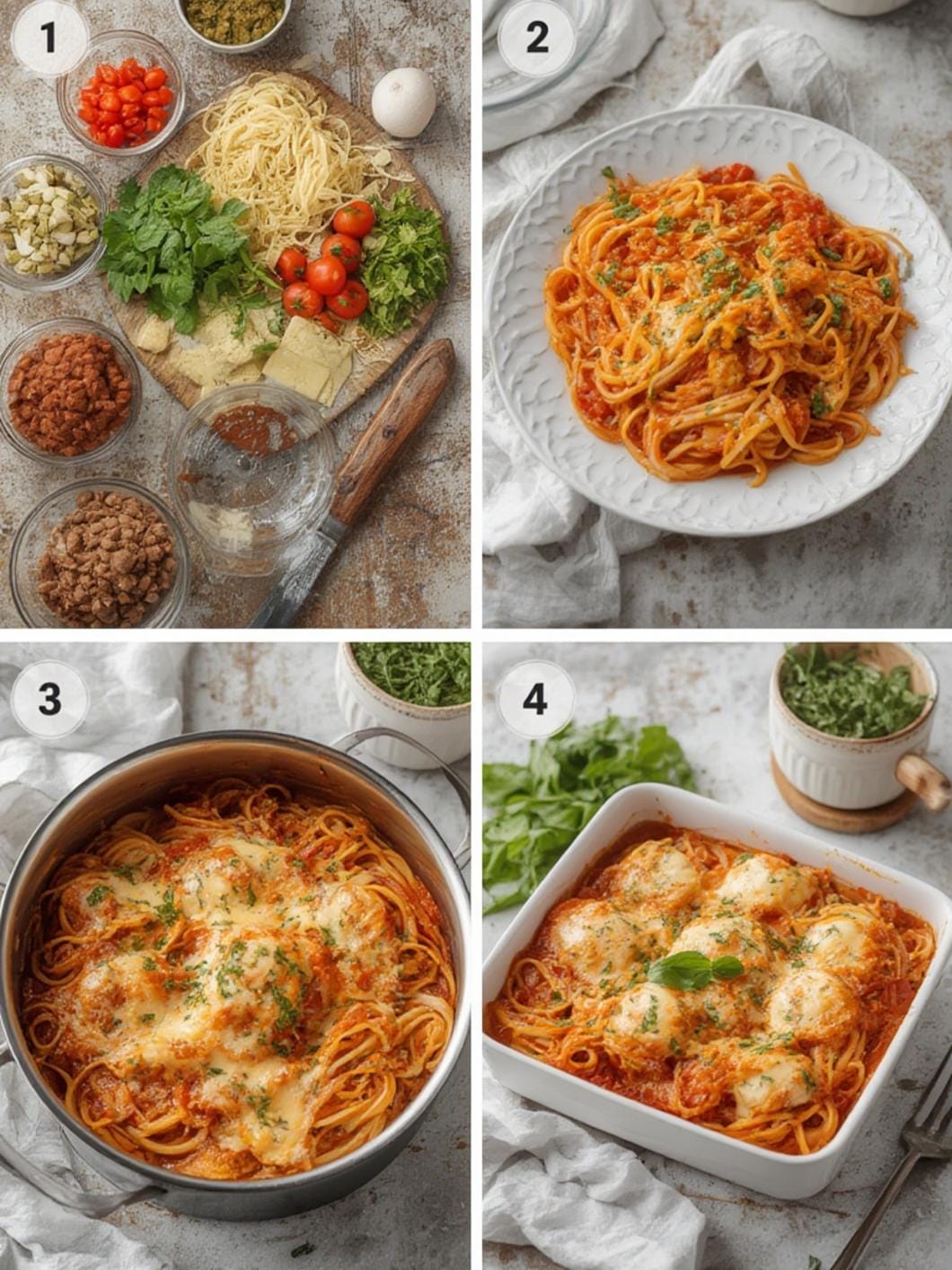
1. Preheat the Oven and Prepare the Baking Dish: Begin by preheating your oven to 375°F (190°C). Lightly grease a 9×13 inch baking dish with cooking spray or olive oil to prevent sticking.
2. Cook the Pasta: Bring a large pot of salted water to a boil. Add the spaghetti and cook according to package directions until al dente (usually 8-10 minutes). Drain well and set aside. It’s important to undercook the pasta slightly for baked spaghetti recipes as it will continue cooking in the oven.
3. Prepare the Meat Sauce: While the pasta cooks, heat olive oil in a large skillet over medium-high heat. Add chopped onion and cook until softened (about 3-4 minutes). Add minced garlic and cook for another minute until fragrant. Add ground meat and cook, breaking it up with a spoon, until browned. Drain excess fat if necessary.
4. Add Seasonings and Sauce: Stir in dried oregano, basil, salt, and pepper. Pour in the marinara sauce and water or broth. Bring to a simmer and let it cook for 5-10 minutes to allow the flavors to meld. Remove from heat.
5. Prepare the Cheese Mixture: In a medium bowl, combine 1 cup of shredded mozzarella, 1/2 cup of grated Parmesan, and the egg (if using). Mix until well combined. This mixture will create a deliciously cheesy topping for your baked spaghetti.
6. Assemble the Baked Spaghetti: Spread half of the meat sauce in the bottom of the prepared baking dish. Add a layer of cooked spaghetti, followed by the remaining meat sauce. Top with the cheese mixture, spreading evenly. Sprinkle with the remaining 1 cup of mozzarella and 1/2 cup of Parmesan.
7. Bake the Dish: Cover the baking dish with foil and bake for 15 minutes. Remove the foil and continue baking for another 20-25 minutes, or until the cheese is golden and bubbly. For an extra crispy topping, you can switch to broil for the last 1-2 minutes (watch closely to prevent burning).
8. Rest and Serve: Remove from oven and let the baked spaghetti rest for 10 minutes before serving. This resting period allows the dish to set and makes it easier to serve. Garnish with fresh parsley if desired.
This easy baked spaghetti recipe creates a perfectly balanced dish with tender pasta, flavorful meat sauce, and a golden, cheesy topping that will have everyone coming back for seconds. The Baked Spaghetti Recipe technique of covering with foil first ensures the pasta absorbs the sauce while preventing the cheese from burning. The Easy Baked Spaghetti method is forgiving and adaptable, making it perfect for both beginners and experienced cooks alike.
Nutritional Benefits / Advantages
Making a baked spaghetti recipe at home offers several nutritional advantages compared to restaurant versions or pre-packaged options. When you control the ingredients, you can significantly reduce sodium, unhealthy fats, and artificial additives while maximizing nutrient density.
One of the primary benefits of homemade baked spaghetti is the ability to choose high-quality proteins and balance them with vegetables. Using lean ground meat, turkey, or plant-based alternatives reduces saturated fat content while still providing essential protein for muscle maintenance and satiety. You can also incorporate finely chopped vegetables like zucchini, carrots, or spinach into the sauce, adding fiber, vitamins, and minerals without altering the flavor significantly.
Whole grain pasta options can further enhance the nutritional profile of your baked spaghetti, increasing fiber content and providing more sustained energy release. Additionally, controlling the amount of cheese and choosing lower-sodium cheese options can dramatically reduce the overall sodium content of the dish.
Another advantage of preparing this easy baked spaghetti at home is the ability to use fresh herbs and spices instead of relying on pre-made seasoning packets that often contain hidden sugars and preservatives. Fresh oregano, basil, and garlic not only add flavor but also provide antioxidant and anti-inflammatory properties.
Portion control is another benefit of making baked spaghetti recipes at home. Restaurant portions are often significantly larger than what nutritionists recommend, leading to overconsumption. When you prepare it yourself, you can create appropriate serving sizes and save leftovers for future meals, making it easier to maintain a healthy diet while still enjoying comforting foods.
Tips, Alternative Methods, or Cooking Advice
To take your baked spaghetti recipe to the next level, here are some expert tips and alternative preparation methods:
Make Ahead: Baked spaghetti is perfect for meal prep. You can assemble the entire dish up to 24 hours in advance, cover tightly, and refrigerate. When ready to bake, add 10-15 minutes to the covered baking time. This is especially helpful for busy weeknights.
Freezer-Friendly: Prepare the baked spaghetti in a disposable aluminum pan, cover with foil, and freeze for up to 3 months. Thaw overnight in the refrigerator before baking as directed, adding extra time if needed.
Air Fryer Method: For a quicker version, you can prepare baked spaghetti in an air fryer. Use a smaller, oven-safe dish that fits in your air fryer basket. Cook at 375°F (190°C) for 15-20 minutes, checking frequently to prevent burning.
Slow Cooker Method: For an even easier approach, layer the ingredients in a slow cooker. Cook on low for 4-6 hours or on high for 2-3 hours until heated through and cheese is melted. This easy baked spaghetti method requires no oven time and keeps the dish warm for serving.
Ingredient Swaps:
– Use cottage cheese or ricotta instead of some mozzarella for a creamier texture
– Try different pasta shapes like penne, rotini, or shells for variety
– Add Italian sausage for extra flavor or use a combination of beef and pork
– Incorporate vegetables like mushrooms, bell peppers, or spinach for added nutrition
– Experiment with different cheeses like provolone, fontina, or pepper jack
Dietary Adjustments:
– For gluten-free: Use gluten-free pasta and ensure your sauce is gluten-free
– For dairy-free: Use dairy-free cheese alternatives and omit the egg
– For low-carb: Use zucchini noodles or cauliflower rice instead of pasta
– For vegetarian: Use plant-based meat substitute and vegetable broth instead of beef broth
Remember that the key to a perfect baked spaghetti recipe is not to overcook the pasta initially and to let it rest before serving to allow the flavors to meld and the dish to set properly.
Common Mistakes to Avoid
Even though baked spaghetti is a relatively straightforward dish, there are several common mistakes that can affect the final result. Being aware of these pitfalls will help you achieve a perfect baked spaghetti every time.
Overcooking the Pasta: One of the most common mistakes when making baked spaghetti is cooking the pasta for too long before baking. Remember that the pasta will continue cooking in the oven, so aim for al dente texture—slightly undercooked according to package directions. If the pasta is fully cooked before baking, it will become mushy and fall apart in the final dish.
Using Too Much Sauce: While it might be tempting to add extra sauce for more flavor, using too much can make your baked spaghetti watery and prevent the cheese from browning properly. The sauce should coat the pasta without drowning it. If you prefer a saucier dish, consider using a thicker marinara or reducing your sauce before assembling.
Not Draining Meat Properly: Failing to drain excess fat from your meat mixture can result in a greasy baked spaghetti recipe. Take the time to thoroughly drain the cooked meat before adding it to the sauce. This simple step prevents a oily texture and allows the flavors to shine through.
Skipping the Rest Time: Cutting into baked spaghetti immediately after removing it from the oven is a recipe for disaster. The dish needs at least 10 minutes to rest and set properly. This resting period allows the cheese to firm up and the pasta to absorb excess moisture, making it much easier to serve and enjoy.
Inconsistent Layering: For the best texture and flavor distribution in your easy baked spaghetti, make sure to create distinct layers: sauce at the bottom, pasta in the middle, and cheese on top. This layering ensures each component cooks properly and creates that perfect contrast between the crisp topping and tender pasta underneath.
Wrong Cheese Selection: Not all cheeses perform the same when baked. Avoid using cheeses that don’t melt well or become oily when heated. Stick with mozzarella, provolone, or Italian cheese blends that create that perfect gooey, golden topping.
Storage / Maintenance Tips
Proper storage and maintenance of your baked spaghetti recipe leftovers will ensure they remain delicious and safe to eat. Follow these guidelines to maximize the shelf life and quality of your leftovers:
Refrigeration: Allow baked spaghetti to cool completely at room temperature (no more than 2 hours) before transferring to an airtight container. Properly stored, baked spaghetti will keep in the refrigerator for 3-4 days. When reheating, add a splash of water or broth to the dish to help restore moisture that may have been lost during storage.
Freezing: Baked spaghetti freezes exceptionally well. Portion the cooled dish into freezer-safe containers or wrap tightly in aluminum foil and plastic wrap. Label with the date and use within 3 months for best quality. To freeze individual servings, use muffin tins, fill with baked spaghetti, freeze until solid, then transfer to freezer bags.
Reheating Methods:
– Oven: Preheat to 350°F (175°C). Place refrigerated baked spaghetti in an oven-safe dish, cover with foil, and heat for 20-25 minutes. Remove foil for the last 5 minutes to crisp the top.
– Microwave: Transfer a portion to a microwave-safe dish, cover with a damp paper towel, and heat in 1-minute intervals, stirring between, until heated through.
– Air Fryer: Place refrigerated or thawed baked spaghetti in an air fryer-safe dish and cook at 350°F (175°C) for 8-12 minutes until heated through.
Meal Prep Tips: This easy baked spaghetti recipe is perfect for meal prep. Assemble the dish without baking, cover tightly, and refrigerate for up to 24 hours. Bake when ready, adding 10-15 minutes to the covered cooking time. You can also prepare individual portions for quick grab-and-go lunches.
Storage Containers: Use shallow, airtight containers for refrigeration as they allow for faster cooling and more even reheating. When freezing, consider using disposable aluminum pans for easy cleanup and portion control.
By following these storage tips, you can enjoy your baked spaghetti recipe for several days after preparation, making it an excellent choice for busy schedules and meal planning.
Conclusion
In conclusion, this baked spaghetti recipe delivers all the comfort and satisfaction of a classic Italian-American dish with the added convenience of being made in your own kitchen. The combination of perfectly cooked pasta, rich meat sauce, and melted cheese creates a harmonious blend of textures and flavors that appeals to all ages. Whether you’re cooking for a family dinner, a potluck, or simply craving a hearty meal, this easy baked spaghetti recipe is sure to become a regular in your rotation.
The beauty of this dish lies in its versatility and adaptability. You can customize it to suit your family’s preferences, use ingredients you already have on hand, and even make it ahead of time for stress-free entertaining. The Baked Spaghetti Recipe technique of covering with foil first ensures perfectly cooked pasta while the uncovered baking time creates that irresistible golden cheese topping. This Easy Baked Spaghetti method is forgiving enough for beginners yet impressive enough for any occasion.
Don’t be afraid to experiment with different ingredients and techniques to make this baked spaghetti truly your own. Add your favorite vegetables, try different cheeses, or incorporate various proteins to create signature versions that your family will love. With its perfect balance of nutrition, flavor, and comfort, this baked spaghetti recipe is destined to become a new favorite in your household.
FAQs
1. Can I use a different type of pasta for this baked spaghetti recipe?
Absolutely! While traditional spaghetti works perfectly, you can use any pasta shape you prefer. Penne, rigatoni, ziti, or shells all work well in baked spaghetti dishes. Just be aware that different shapes may require slightly different cooking times. Smaller pasta shapes like shells or elbow macaroni may cook faster, while larger shapes like rigatoni might need a bit more time in the oven.
2. How do I prevent my baked spaghetti from being watery?
To prevent a watery baked spaghetti, make sure to drain your pasta thoroughly after cooking. You can also toss the drained pasta with a small amount of olive oil to prevent sticking. Additionally, if using fresh tomatoes or very watery sauce, consider simmering the sauce for a few minutes to reduce excess liquid before assembling the dish. Another tip is to let the assembled dish rest before baking to allow the pasta to absorb some of the sauce.
3. Can I make this baked spaghetti recipe without meat?
Yes, you can easily make a vegetarian version of baked spaghetti. Simply omit the meat and increase the vegetables in your sauce. You can add mushrooms, bell peppers, zucchini, or eggplant for substance and flavor. For a protein boost, consider incorporating lentils, beans, or a plant-based meat substitute. You can also make a delicious baked spaghetti using ricotta, spinach, and various cheeses for a classic vegetarian Italian-American dish.
4. How long does it take to reheat leftover baked spaghetti?
Reheating times vary depending on the method and whether the baked spaghetti is refrigerated or frozen. For refrigerated baked spaghetti, allow about 20-25 minutes in a 350°F (175°C) oven covered with foil, or 2-3 minutes in the microwave. If frozen, thaw overnight in the refrigerator before reheating, or bake directly from frozen at 350°F (175°C) for 45-60 minutes, covered for the first 30 minutes. The easy baked spaghetti leftovers are just as delicious as when first made, following proper reheating techniques.
5. Can I prepare this baked spaghetti recipe ahead of time?
Definitely! This baked spaghetti recipe is perfect for make-ahead meals. You can assemble the entire dish (without baking) up to 24 hours in advance, cover tightly, and refrigerate. When ready to bake, simply add 10-15 minutes to the covered baking time. You can also bake the entire dish and refrigerate for up to 3 days before reheating. For longer storage, freeze unbaked baked spaghetti for up to 3 months. Thaw overnight in the refrigerator before baking as directed.